TAPAM Historical article :1974 UNESCO symposium and the work of Cheikh Anta Diop.
Written by: Unapologetic Pro-African Perspective
In the spirit of intellectual honesty and historical precision, TAPAM presents the following fact-check regarding widely circulated claims about the 1974 UNESCO symposium and the work of Cheikh Anta Diop.
The 1974 UNESCO Symposium Context
The event commonly referenced took place under the auspices of UNESCO, focusing on the origins of ancient Egyptian civilization and African contributions to history.
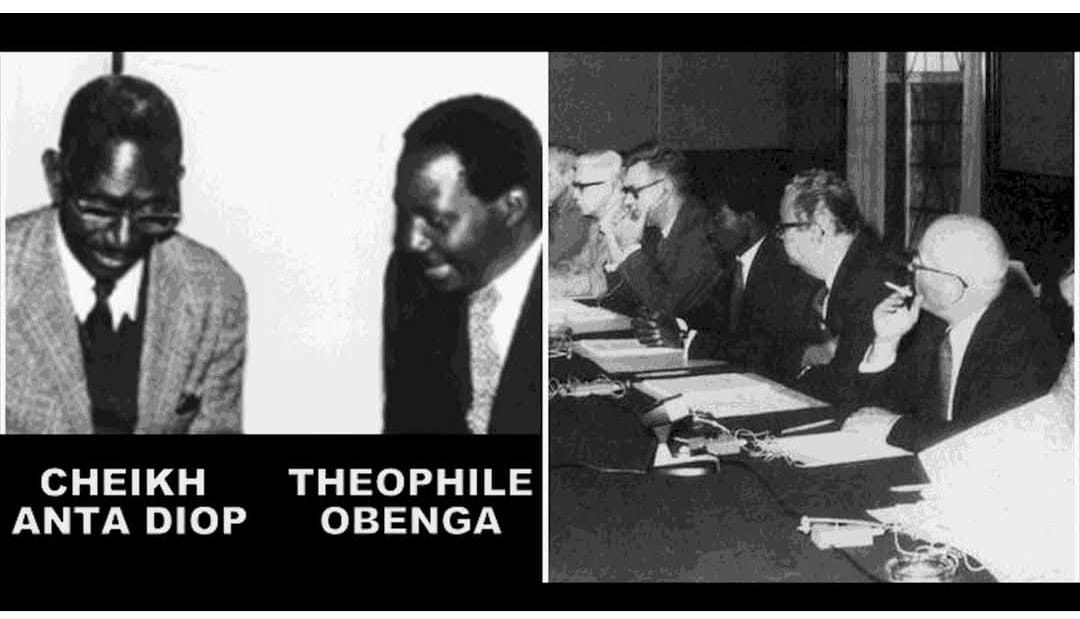
It is accurate that Diop and fellow scholar Theophile Obenga presented research arguing for strong African continuity in ancient Egypt.
However, the claim that their papers “went virtually unchallenged” is not historically precise. The symposium included debate, academic responses, and differing interpretations from participating scholars.
Publication Record
The proceedings were later published (notably in 1978), and the discussions reflected both agreement and disagreement among participants. The published conclusions acknowledged that the debate was academically uneven in preparation, but this does not mean universal acceptance of all arguments presented.
On the Evidence Categories
Diop’s work is widely respected for advancing African-centered historiography. However, several points require careful clarification:
Physical anthropology & skeletal classification:
Modern bioarchaeology recognizes that ancient Egyptian populations were biologically diverse within Northeast Africa. The term “Negroid” is now considered outdated in scientific anthropology.
Melanin dosage claims on mummies:
These assertions remain contested in mainstream archaeology and are not universally accepted as definitive proof of population identity.
Blood type arguments:Blood group distributions are not reliable indicators of race or ethnicity in historical populations.
Ancient Greek and Roman descriptions:Some classical writers described Egyptians as dark-skinned, but interpretations vary and must be read within historical context.
Linguistic relationships:
The ancient Egyptian language belongs to the Afroasiatic language family, which includes several African and Near Eastern languages. Linguistic classification does not automatically determine racial identity.
Scholarly Consensus Today
Modern Egyptology and genetics show that ancient Egypt was a Northeast African civilization with complex interactions
across Africa, the Mediterranean, and the Near East. The civilization is widely recognized as fundamentally African in geography and development, but debates continue regarding population variation across different eras.
TAPAM Position
- TAPAM supports:
- African historical dignity
- Intellectual independence
- Evidence-based scholarship
- Correction of Eurocentric distortions
Balanced academic discourse
History must be defended with facts — not mythology, whether external or internal.
The contributions of Cheikh Anta Diop were groundbreaking and remain highly influential in African studies. However, some popular retellings of the 1974 UNESCO proceedings exaggerate elements of unanimity or lack of challenge.
True intellectual strength comes from accurate scholarship, not overstatement.
Every article we share is more than just words—it’s a window into the movement we’re building together. Behind every story of youth transformed, every heritage preserved, every community uplifted, there are people like you who believe in Africa’s future.
If this article has inspired you, consider turning that inspiration into action. Your donation—no matter the size—helps us reach more young leaders, document more disappearing histories, and touch more lives.
Together, we are building a mentally awakened, united, and prosperous Africa.